
SEO Strategy & Execution
I develop and execute data-driven SEO strategies across 25+ client accounts, focusing on technical performance, content strategy, and local search visibility.
What I Do
Technical SEO
- Implement schema markup to enhance search visibility and rich results
- Conduct site audits to improve crawlability, indexing, and site structure
- Optimize Core Web Vitals, page speed, and internal linking
Content Strategy
- Perform keyword research and develop structured content strategies
- Optimize metadata, headers, and alt text to improve relevance and accessibility
- Organize blog categories and content architecture for improved indexing and user experience
Local SEO
- Optimize Google Business Profiles and local search performance
- Apply AI-informed optimization strategies to align with evolving search behavior and SERP features
- Adapt to algorithm updates to maintain and improve rankings without traffic loss
How i work
Audit → Strategy → Execution → Optimization
AUDIT
Identify technical issues, content gaps, and missed opportunities
During this stage, I identify key strengths and weaknesses across the website and overall marketing strategy. This includes evaluating user experience, site performance, keyword intent, and content gaps, google business profile rankings, as well as conducting competitor research to uncover opportunities and areas for improvement.
To deepen the audit, I use tools such as SEMrush and Screaming Frog to uncover technical SEO issues, site structure gaps, and optimization opportunities. I also assess AI visibility to ensure content is aligned with evolving search behavior and discovery trends.

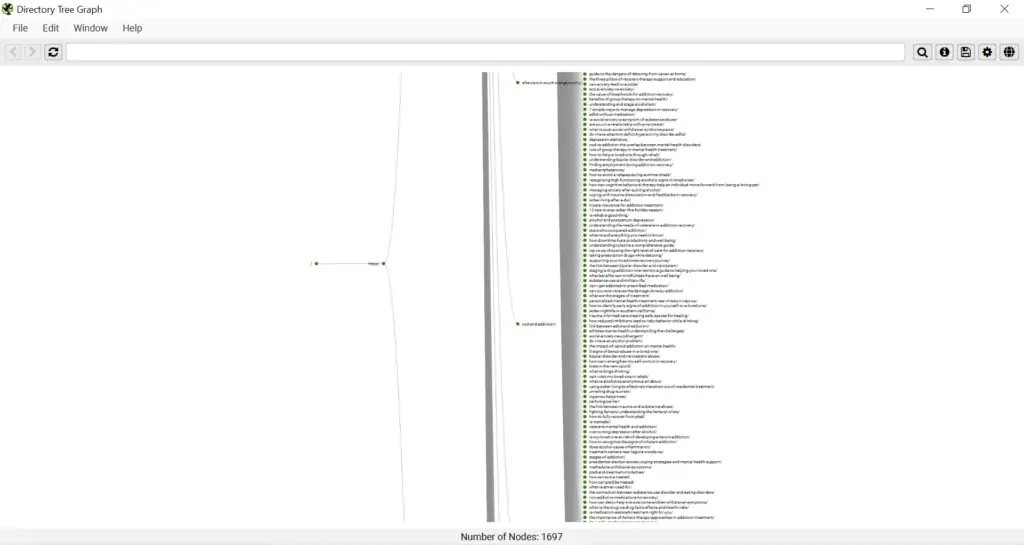
Screaming frog
Using Screaming Frog, I perform in-depth site crawls to analyze website structure, identify technical SEO issues, and uncover optimization opportunities. This allows me to gain a complete understanding of how a site is built and where improvements can be made.
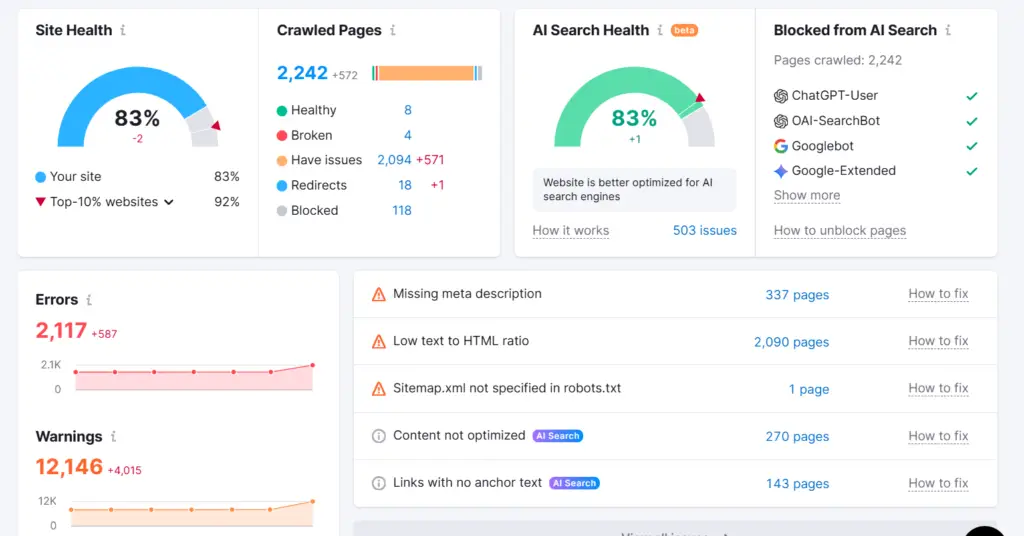
SEMrush
I use SEMrush to validate crawl data, identify additional technical and content issues, and uncover opportunities for optimization. It provides deeper insights into site health, keyword performance, and competitor positioning, allowing me to build a more in-depth and data-driven SEO strategy.
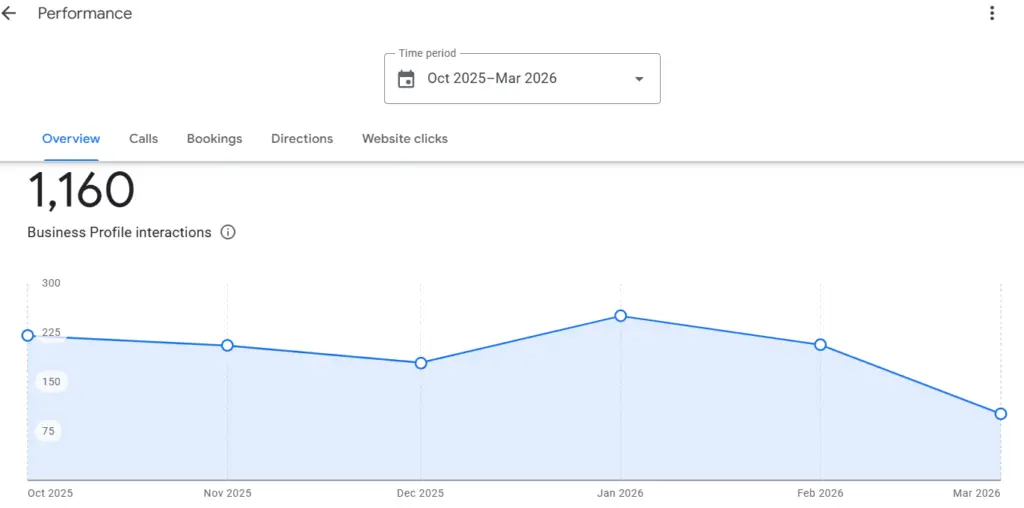
Google Busines Profile
Google Business Profile rankings and search is also considered in my process. this data and the most important impact on local search
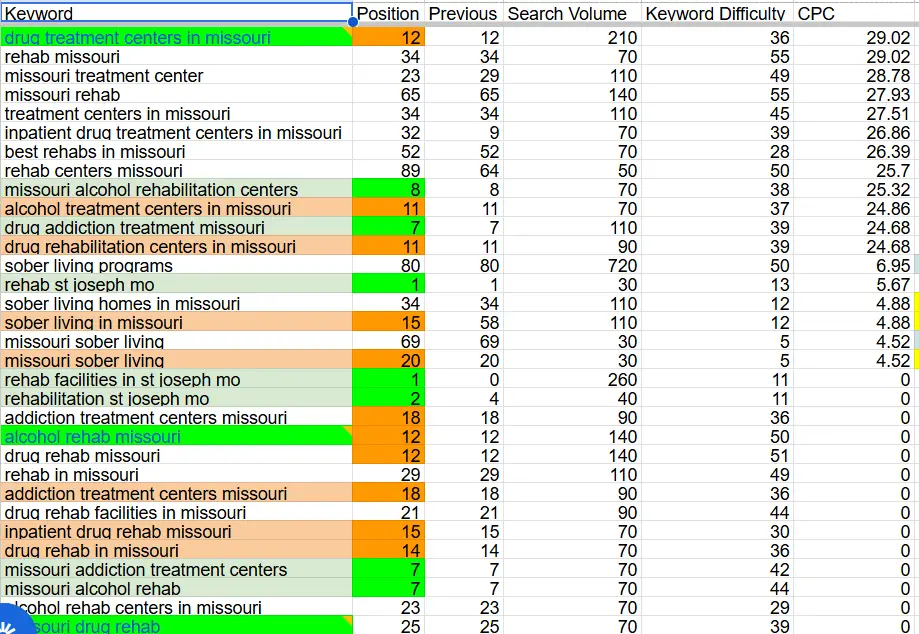
When creating a strategy, I consider multiple factors including client needs, SEO best practices (site health), AI presence, user experience, local search visibility, and competitor gaps. I conduct in-depth keyword research to identify primary and secondary keywords, building a targeted strategy that supports long-term growth and visibility. My overall goal is to help clients succeed in their field, and to ensure they maintain and grow that position over time.
I develop quarterly strategies that incorporate SEO efforts across both on-page and off-page optimization, along with website UX and AI-driven improvements. Each month is structured around a focused theme to ensure search intent is consistently addressed and aligned with user behavior.

Keyword Research
Keyword research is the key to all of my efforts. Identify "easy win" keywords to maintain, keywords to target, and competitor keywords that we are missing out on.
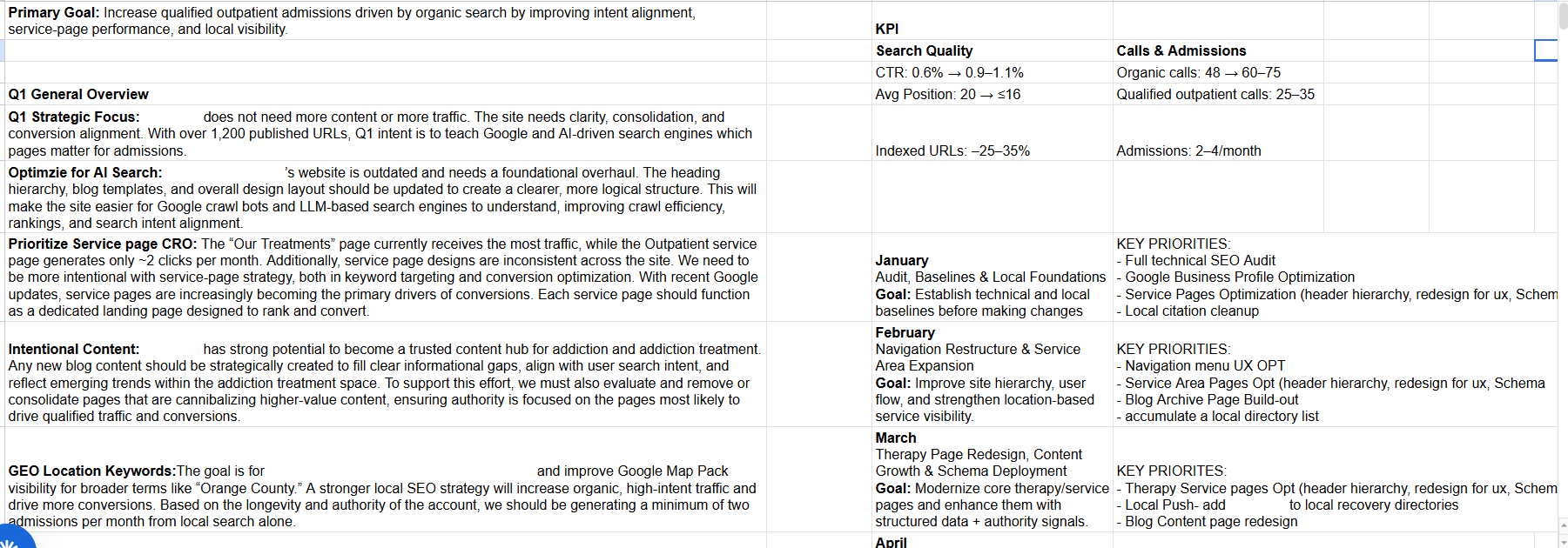
Quarter Planning
Each client has an overall primary goal and hurtles to get there. those minor battles help me and my team reach the overall goal.
Strategy
Build a targeted plan aligned with business goals
Execution
Coordinate implementation across content, web, and SEO
During execution, I focus heavily on team coordination and project management. I ensure deadlines are met, priorities are clear, and the overall strategy stays on track. This includes running weekly check-ins to review progress and goals, staying closely involved with the team to provide support where needed, and using tools like Monday.com to assign tasks and manage workflows. I step in where necessary to keep things consistent, maintain quality, and make sure everything stays on track throughout the quarter.

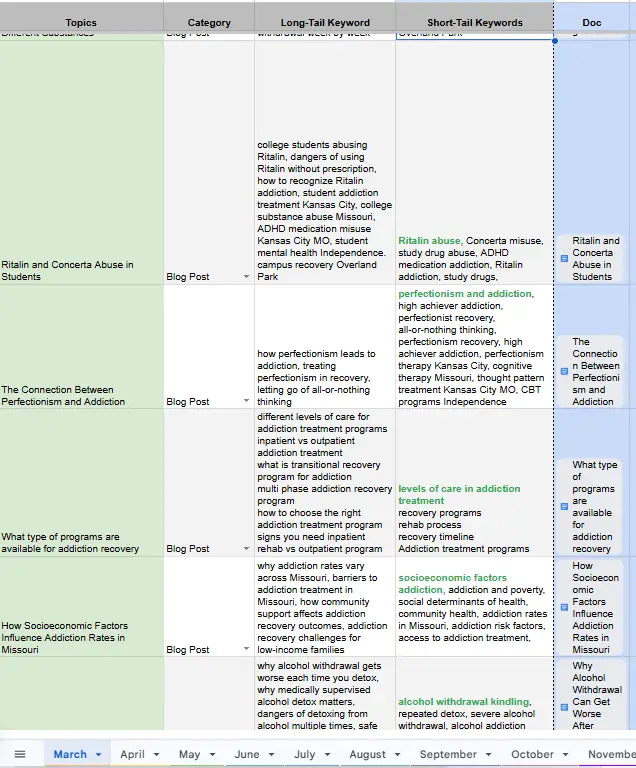
Content tracking
To monitor on-page progress, I use detailed tracking systems and spreadsheets to ensure all content aligns with strategy and performance goals.
At the end of each quarter, I evaluate performance against defined goals. If certain targets are not met, I adjust the approach whether through A/B testing, additional optimizations, or refining the strategy.
I continuously revisit and improve pages, using insights from performance data to guide future decisions and drive ongoing growth.

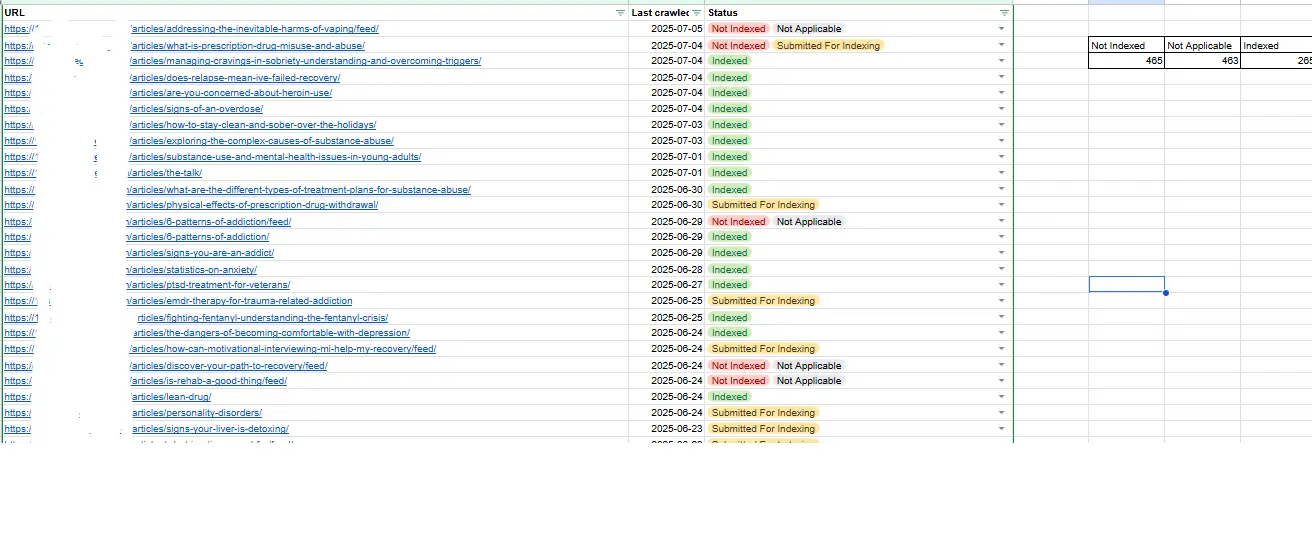
Indexing
Tracking indexing status is a critical part of the process. I continuously monitor how pages are being indexed and ensure all optimization efforts align with current indexing performance across Google platforms.

Optimization
Continuously analyze data and refine performance
Tools & Platforms
Google Search Console
Google Search Console is one of my primary tools. I use it daily to monitor indexing status, analyze click-through rates, evaluate top-performing pages, and identify backlink opportunities. It plays a key role in both research and performance tracking.
SEMRush
I use SEMrush for keyword research, competitor analysis, and identifying optimization opportunities. It helps me validate data, uncover gaps, and build stronger, more informed strategies.
Google Analytics (GA4)
I use GA4 to analyze user behavior and understand how people interact with a site. It’s my go-to for evaluating content performance, user flow, and overall site engagement.
CallRail
CallRail is my primary tool for tracking conversions. Being able to listen to calls and see which landing pages are driving leads helps me better understand performance and make more informed optimization decisions.
Screaming Frog
I use Screaming Frog to run full site crawls and get a complete picture of a website’s structure. It’s a key tool in my technical SEO work and plays a big role in quarterly planning and audits.